Fire risk assessor in Manchester
A walk round the building, a written assessment, and a list of what to fix first.
- Written report to keep on file
- Clear action plan, highest risk first
- Price agreed before booking
For a lot of buildings the last fire risk assessment is a PDF from years ago that nobody has opened since. The alarm panel has been swapped, two flats have been knocked into one, and the bins now live under the stairs. That PDF describes a building that no longer exists.
Our fire risk assessors cover Manchester and the towns around it. They walk the building with you or your caretaker and look at three things: what could start a fire, how people would get out, and what would stop smoke and flame spreading while they do. You then get a written assessment and an action plan, worst problems first.
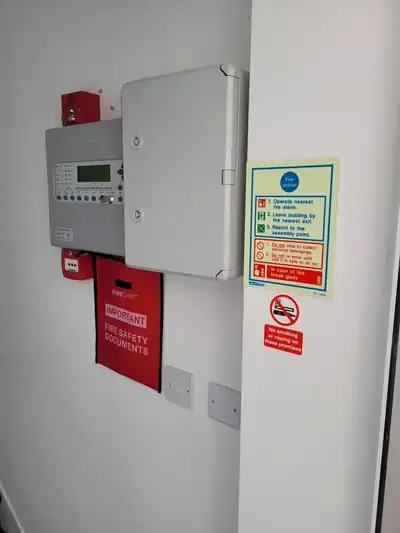
What the law asks of you
In England the Regulatory Reform (Fire Safety) Order 2005 puts the duty on the "responsible person". That is usually the employer, the owner, the landlord or the managing agent, whoever has control of the premises. Since 1 October 2023, changes made by section 156 of the Building Safety Act 2022 mean the whole assessment has to be written down, however small the business. Before then an employer with fewer than five staff, no licence and no alterations notice could keep it in their head.
Anyone you appoint to help with it has to be competent, meaning enough training, experience and knowledge for the building in front of them. A two-storey shop and a nine-storey block of flats are not the same job.
Buildings we assess
Blocks of flats, with the Type 1 to Type 4 choice explained. HMOs and rented houses. Offices and shops. Care homes. Holiday lets and guest rooms. There is also a page on what an assessment costs.
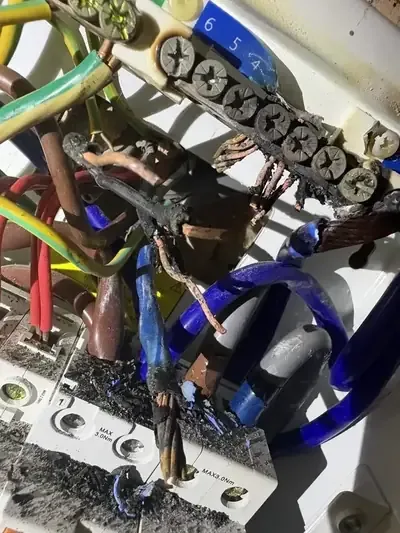
A made-up action plan
Picture a three-storey office over a ground floor shop. The plan might read like this, highest risk at the top:
- Rear exit door locked with a key on Saturdays. Fit a thumb-turn or push bar. Do now.
- Exit sign over the shop door dark on test. Repair the emergency light. Within one month.
- Four extension leads plugged into each other under the first floor desks. Remove them and add sockets. Within one month.
- No alarm test written down since March. Start a log book. Within one week.
Each line says what was found, where it is, what to do and by when. If your current plan does not read like that, it is hard to act on.
An assessment is its own job
A fire risk assessment is not a fire door inspection and it is not fire stopping. The assessor may note that a door will not close or that a cable hole runs through a wall, and put it on the action list. Putting it right is separate work, priced separately.
Most small premises start from around £550 plus VAT. Blocks of flats and larger buildings are priced from the floor area and how the building is used.
Assessments we carry out
How it works
- 1Send the detailsThe postcode, what the building is used for, how many floors and your last assessment if you have one.
- 2Assessment on siteAn assessor walks the building, checks escape routes, alarms, doors and fire stopping, and talks to whoever runs it.
- 3Report and action planA written assessment with each finding ranked, so you know what to fix first.
Where we go
Our fire risk assessors cover Manchester and the towns listed here. Send the postcode and we will tell you when someone can get to you.
Tell us what the building is used for, the postcode and roughly how big it is. You get a written price back.